
Why Won't My Betta Fish Eat? 9 Causes & Fixes That Actually Work
Your betta ignoring food is usually fixable in days. Here are the 9 real reasons bettas stop eating — from new-tank stress to water temperature — and exactly what to do about each.
On this page
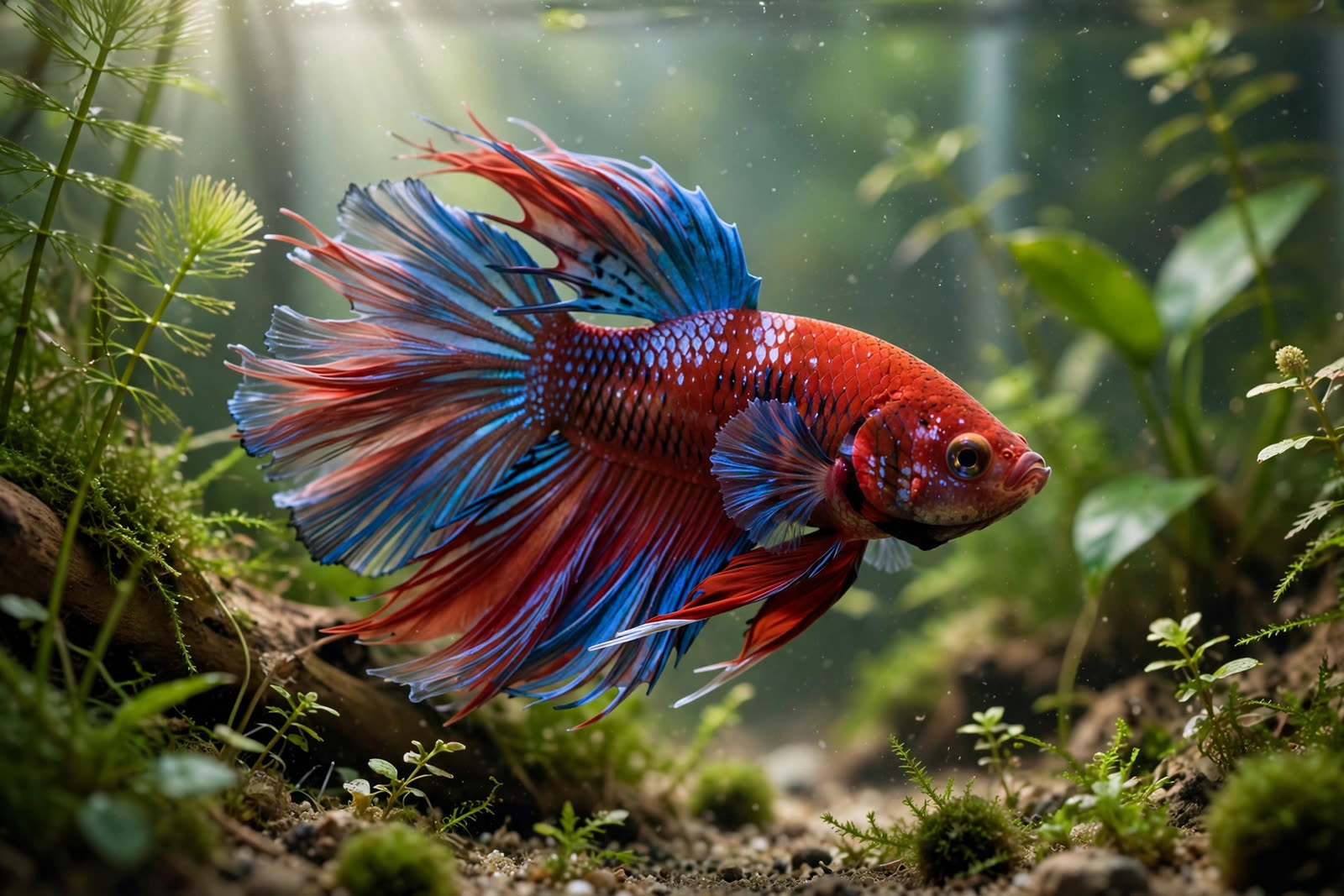
Your betta was eating fine last week. Now he stares at the pellets like they’re insults and swims away. Before you panic — a betta refusing food is one of the most common problems in the hobby, and in roughly 8 out of 10 cases it’s an environment problem with a straightforward fix, not a dying fish.
Quick answer: The top two reasons bettas stop eating are cold water (below 76°F slows their metabolism to a crawl) and new-tank stress (bettas often fast 3–5 days in a new home). Check your thermometer first, then your water parameters, then try frozen bloodworms to restart the appetite. Work through the fixes below in order.
Disclosure: Whisker & Wag is reader-supported. When you buy through links on this page, we may earn a commission at no extra cost to you. Learn more. Our picks are researched picks — compiled from aquarist communities, breeder guidance, and product specs — not hands-on tests. See how we rate products.
Cause 1: The water is too cold
This is the #1 cause, full stop. Bettas are tropical fish. Below 74°F their metabolism slows, they get lethargic, their colors fade, and they stop eating. Most “my betta won’t eat” cases I’ve seen traced back to a room-temperature tank or a cheap preset heater that runs cool.
The fix: Get the tank to a steady 78–80°F. A quality adjustable 25-watt heater (for a 5-gallon tank) or 50-watt (for 10 gallons) holds temperature reliably. Skip the non-adjustable “betta heaters” — they often stabilize at 72–74°F, which is exactly the problem zone.
Adjustable aquarium heater at Chewy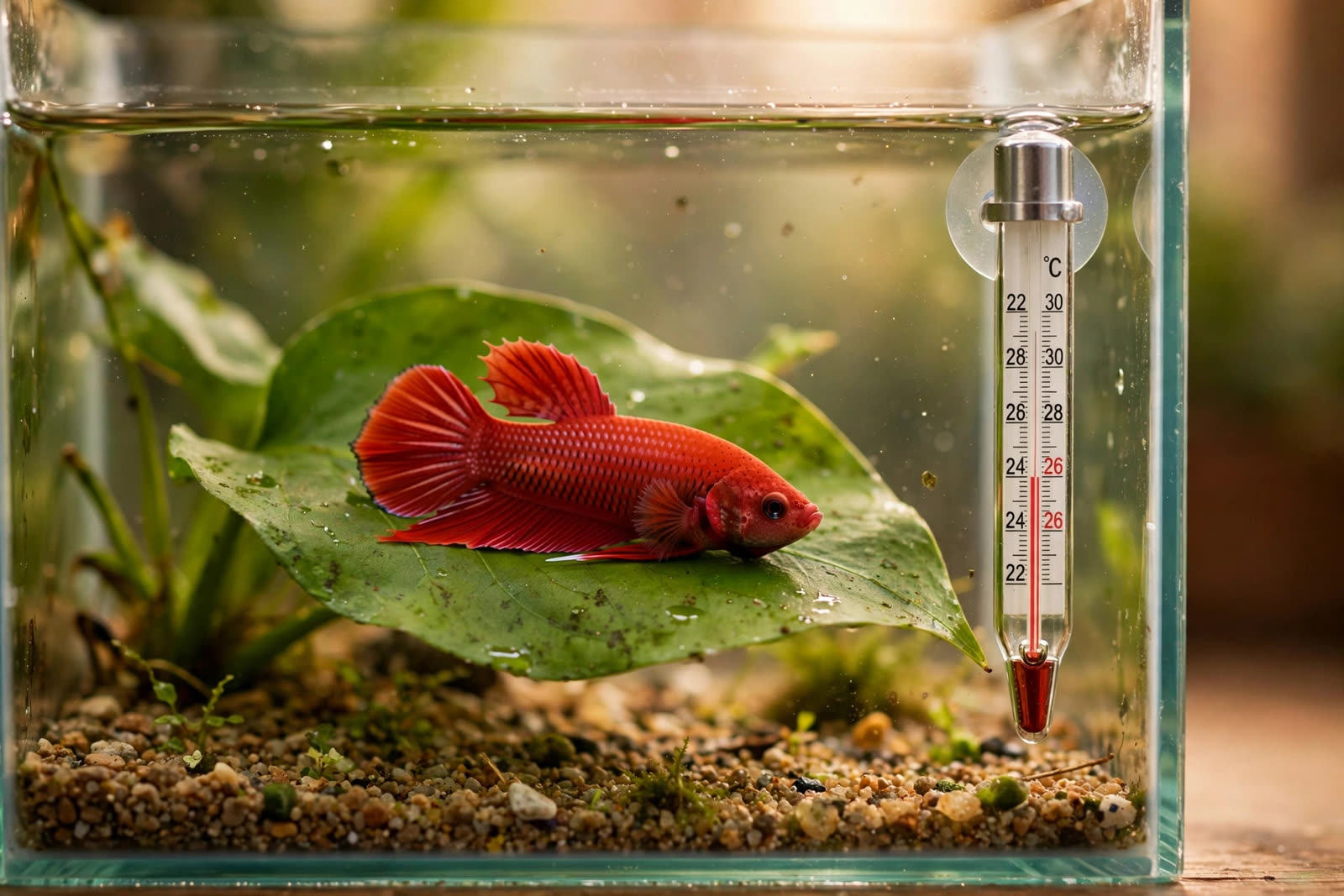
Warm the tank gradually — no more than 2–3°F per day — to avoid shocking the fish. Most cold-water bettas start showing interest in food within 24–48 hours of reaching 78°F.
Cause 2: New-tank stress
A betta moved to a new tank commonly refuses food for 3–5 days. He’s exploring, flaring at his reflection, and generally too wired to eat. This is normal.
The fix: Patience, plus a low-stress setup. Dim the lights, give him hiding spots (live or silk plants — never sharp plastic ones), and don’t tap the glass or hover. Offer food once a day; remove uneaten food after 5 minutes so it doesn’t rot. If he’s still refusing after 7 days, move on to causes 3–9.
Cause 3: Bad water quality
Ammonia and nitrite burn a betta’s gills and destroy appetite long before they kill. If the tank is new and wasn’t cycled, or the filter was recently replaced, toxins are the prime suspect — even in a tank that “looks” clean.
The fix: Test the water. A liquid test kit (the API Freshwater Master Test Kit is the standard — test strips are notoriously inaccurate) should read ammonia 0 ppm, nitrite 0 ppm, nitrate under 40 ppm. If ammonia or nitrite show up:
- Do a 30–50% water change immediately (dechlorinated, temperature-matched water)
- Dose a water conditioner like Seachem Prime to detoxify ammonia between changes
- Test daily and change water until readings stay at zero
A properly cycled, filtered tank is the long-term fix. If your filter situation is shaky, our guide to the best aquarium filters for small tanks covers sizing and flow for betta-friendly setups — bettas hate strong current, so a gentle sponge or adjustable hang-on-back filter matters.
Cause 4: The pellets are too big or stale
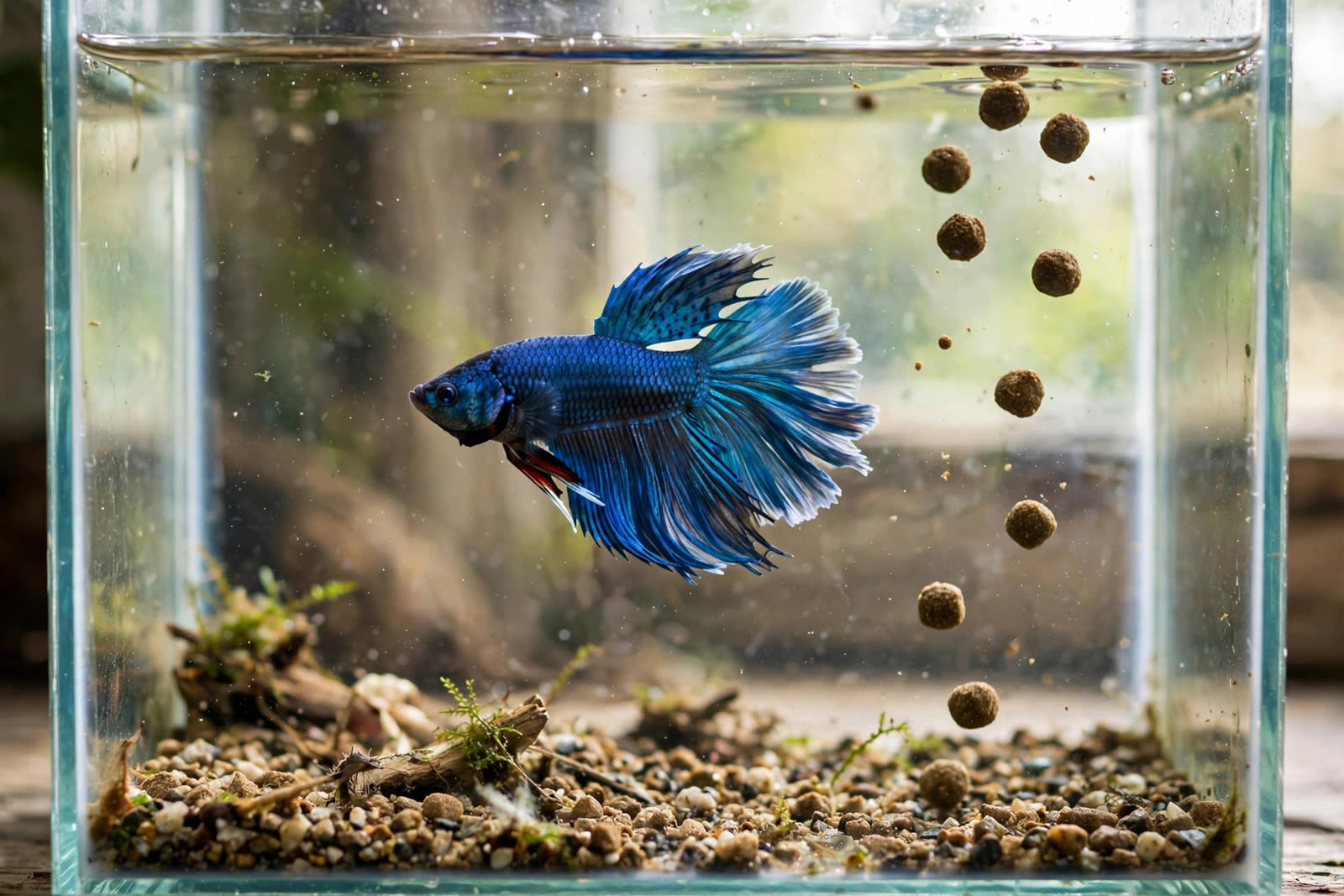
Bettas spit out pellets that are too large, too hard, or stale. That big jar of betta pellets from two years ago? Fish food goes stale in 3–6 months after opening, and bettas notice.
The fix: Switch to micro pellets (1mm or smaller). Solid researched picks:
- Hikari Betta Bio-Gold — the long-standing community favorite; tiny pellets, high protein
- Omega One Betta Buffet Pellets — whole-ingredient formula, strong smell that triggers feeding response
- New Life Spectrum Betta Formula — nutrient-dense, very small pellets
Soak pellets in tank water for 30 seconds before feeding to soften them. Feed 2–4 pellets twice daily — a betta’s stomach is roughly the size of its eye, so “a pinch” is always too much.
Cause 5: He’s bored of the menu
Bettas are insectivores. A pellet-only diet gets monotonous, and some bettas simply go on hunger strike until something interesting shows up. In the wild they eat insect larvae, not processed pellets.
The fix: Offer frozen or live foods 2–3 times a week:
- Frozen bloodworms (Hikari brand is widely available) — the universal betta appetite-restarter
- Frozen daphnia — doubles as a gentle laxative if constipation is involved
- Frozen brine shrimp — great for picky eaters
Thaw a small piece in tank water first, then feed with tweezers or a pipette. Most pellet-refusing bettas strike at bloodworms within seconds. Once he’s eating, mix pellets back in gradually.
Cause 6: Overfeeding damage (constipation/bloat)
Ironically, a betta that “won’t eat” may have been overfed. A bloated belly, stringy white poop, or a betta that approaches food then turns away can signal constipation or the early stages of swim bladder trouble.
The fix: Fast him for 24–48 hours (healthy adult bettas handle this easily), then feed a small amount of thawed frozen daphnia — it acts as a natural laxative. If the belly stays swollen after 3 days of daphnia, or scales start pineconing (sticking out), that’s dropsy territory and needs a vet or experienced fishkeeper’s help.
Cause 7: Stress from tank mates or environment
Bettas are solitary and territorial. “Community tank” setups, mirror toys left in too long, constant foot traffic past the tank, or a filter current that pins him in a corner all create chronic stress — and stressed bettas don’t eat.
The fix:
- Keep bettas solo (or only with genuinely peaceful tank mates in 10+ gallons — and even then, watch closely)
- Remove mirror toys after 5 minutes; constant “rival” exposure exhausts them
- Baffle strong filter flow (a sponge over the intake/output works)
- Give the tank a background on at least the back pane so he doesn’t flare at his reflection all day
Cause 8: He’s just… adjusting to you
New bettas from pet stores often ate live or frozen food at the breeder and have never seen a pellet. A betta raised on bloodworms may genuinely not recognize your pellets as food.
The fix: Bridge the gap. Start with what he’ll take (frozen bloodworms), then transition: mix a few pellets in with the bloodworms, gradually increasing the pellet ratio over 1–2 weeks. Hunger plus familiarity does the work — healthy bettas almost always convert.
Cause 9: Actual illness
If you’ve fixed temperature, water quality, food, and stress and he still won’t eat after a week — look for disease. Common appetite-killers:
- Ich (white salt-like spots) — raise temp to 82°F gradually and treat
- Fin rot (ragged, dark-edged fins) — usually secondary to bad water; fix water first
- Velvet (gold-dust sheen under a flashlight) — treat with copper-based medication
- Internal parasites (stringy white poop, wasting despite eating) — medicated food
Sick bettas also show clamped fins, rapid gill movement, or bottom-sitting. If you see these plus appetite loss, treat the disease — the appetite returns when the illness clears.
The daily routine that keeps bettas eating
Most appetite strikes are preventable with a boring, consistent routine:
- Feed at the same times daily — twice a day, 2–4 micro pellets per feeding. Bettas learn schedules fast and show up hungry when the routine is predictable.
- Rotate the menu weekly — pellets as the staple, frozen bloodworms or daphnia twice a week. Variety keeps picky eaters engaged and covers nutritional gaps pellets miss.
- Skip one day a week — a weekly fast day is standard practice among betta keepers. It prevents the slow constipation buildup that eventually shows up as appetite loss.
- Remove uneaten food after 5 minutes — a tiny net or turkey baster does the job. Rotting food spikes ammonia, and ammonia kills appetite faster than almost anything else.
- Keep the heater on a thermostat check — glance at the thermometer daily when you feed. Heaters fail silently, and a slow temperature slide is the stealthiest cause of fading appetite.
Consistency is the whole game. Bettas thrive on stable warm water, clean parameters, and a varied-but-predictable diet. Nail those three and appetite problems become rare.
The 5-minute troubleshooting checklist
Work in this order — most cases resolve at step 1 or 2:
- Temperature: Is it 78–80°F? If not, fix the heater.
- Water: Test ammonia/nitrite. Any reading above zero → water change.
- Food: Try frozen bloodworms. If he eats those, it’s a food problem, not a fish problem.
- Stress: New tank? Tank mates? Strong current? Mirror? Remove the stressor.
- Timeline: Under 5 days of fasting with no other symptoms? Usually fine — keep offering, keep water clean.
When to actually worry
Call it an emergency — and get help from an experienced fishkeeper or aquatic vet — if you see: pineconing scales (dropsy), severe bloating that doesn’t resolve in 3 days, gasping at the surface with rapid gill movement, white cottony growths, or a betta that’s been motionless on the bottom for 24+ hours. A betta that’s active, flaring, and colorful but ignoring dinner is annoying, not dying.
Related guides
- Best Aquarium Filter for a 20-Gallon Tank 2026 — gentle, betta-safe filtration options for small tanks
Reader-supported Whisker & Wag is reader-supported. When you buy through links on this page, we may earn a commission at no extra cost to you. Learn more.
Frequently asked questions
How long can a betta fish go without eating?
A healthy adult betta can survive 10–14 days without food, but don’t let it come to that. If your betta hasn’t eaten in more than 3–4 days, treat it as a problem to solve, not a waiting game. Fry (baby bettas) can’t go more than 2–3 days. Use the clock as urgency: the longer it refuses, the more likely something environmental or medical is wrong.
Why does my betta eat then spit the food back out?
Spitting usually means the pellet is too big or too hard. Bettas have small mouths and will reject pellets that don’t fit or that haven’t softened. Switch to micro pellets (1mm or smaller) or soak pellets in tank water for 30 seconds before feeding. If he spits out even softened food, check water parameters — fish with ammonia burn or illness lose their ability to swallow.
Is my betta fish dying or just not hungry?
Not eating alone doesn’t mean dying — new-tank stress and cold water are the two most common causes and both are fixable. Warning signs of real trouble: clamped fins, labored breathing at the surface, white spots, bloating with raised scales, or lying on the bottom and not reacting. If your betta is active, flaring, and colorful but ignoring food, it’s almost certainly environmental.
Should I try live food if my betta won't eat pellets?
Yes — this is the #1 trick for stubborn bettas. Most bettas will refuse pellets but strike at live or frozen bloodworms, brine shrimp, or daphnia. Once he’s eating again, gradually mix pellets back in with the treat food over a week. Frozen foods (Hikari frozen bloodworms, frozen daphnia) are easier than live and nearly as effective.
What temperature should a betta tank be?
76–82°F (24–28°C), with 78–80°F being the sweet spot. Below 74°F, a betta’s metabolism slows dramatically — he becomes lethargic, loses color, and stops eating. This is the single most common cause of appetite loss. An adjustable 25-watt heater in a 5-gallon tank holds 78°F reliably; preset ‘betta’ heaters often run cool.